


Call us today 01908 282428
Book Online
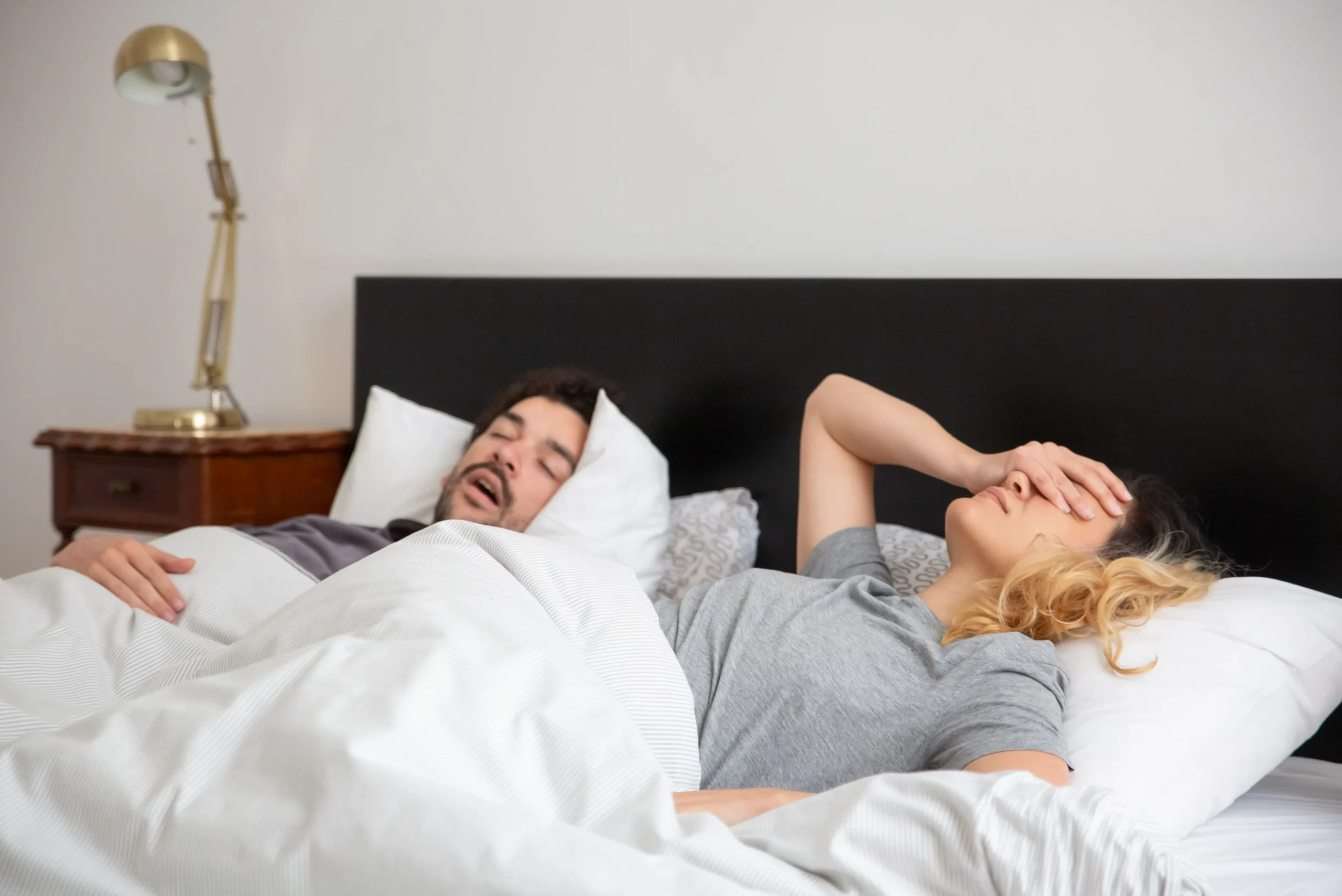
A mandibular advancement device is a mouth guard worn at night that holds your lower jaw slightly forward, which pulls the tongue and soft palate away from the back of the throat and keeps the airway open. For many people whose snoring comes from the tongue falling back, a dentist-made snore guard reduces or stops it. It does not suit every type of snoring, and loud snoring can be a sign of sleep apnoea, which needs a GP first.
This guide explains how the device works, how a dentist-made snore guard differs from one bought online, who it suits, and what happens at a fitting appointment.
A mandibular advancement device works by holding the lower jaw (the mandible) slightly forward while you sleep. As the jaw moves forward, it brings the tongue and soft palate with it, which widens the space at the back of the throat. According to a patient leaflet from Queen Victoria Hospital NHS Foundation Trust, this helps keep the airway open during sleep.
Snoring is the sound of soft tissue in the mouth, throat or nose vibrating as air passes through a narrowed airway. Keeping the airway wider means there is less to vibrate.
You may see the device called a mandibular advancement splint (MAS), a mandibular repositioning appliance (MRA), an anti-snoring mouthguard or simply a snore guard. They all describe the same idea: two plates, one for the top teeth and one for the bottom, joined so the lower jaw sits forward.
A snoring mouth guard works best when the tongue is the cause. The NHS guidance on snoring matches treatment to the cause:
| Cause of snoring | What usually helps |
|---|---|
| Tongue falling back and blocking the throat | Mandibular advancement device |
| Mouth falling open during sleep | Chin strap or a vestibular shield to encourage nose breathing |
| Blocked or narrow nasal airways | Nasal strips, dilators, or sprays to reduce swelling |
The same NHS page lists the habits that make snoring more likely: being overweight, smoking, drinking alcohol and sleeping on your back. Changing these can reduce snoring with or without a device.

If you snore with your mouth closed, or your partner notices the snoring is worse when you lie on your back, the tongue is a likely cause and a mandibular advancement device is worth considering. Your first snore guard consultation with us is free and takes around 30 minutes. We go through a short sleep questionnaire with you, assess your bite, jaw, and airway, take digital measurements of your teeth, and show you the device before recommending one.
Snoring can be a sign of obstructive sleep apnoea, where the airway closes for short periods during sleep and breathing stops and starts. The NHS page on sleep apnoea lists the signs: gasping, snorting or choking noises, waking often, loud snoring, and feeling very tired, struggling to concentrate or waking with headaches during the day.
The National Institute for Health and Care Excellence (NICE) advises that people with two or more features such as snoring, pauses in breathing seen by a partner, unrefreshing sleep, waking headaches or unexplained daytime sleepiness should be assessed for sleep apnoea. The full list is in NICE guideline NG202.
Watch out: if your partner has noticed you stop breathing, gasp or choke in your sleep, or you feel sleepy during the day, see your GP before having a snore guard made. A device can quieten the snoring while leaving apnoea untreated. The NHS also notes you may need to tell the DVLA if you are diagnosed with sleep apnoea.
Sleep apnoea is often treated with a CPAP machine. NICE recommends that a customised or semi-customised mandibular advancement splint is considered as an alternative to CPAP for adults with mild sleep apnoea, and for moderate or severe cases where CPAP is not tolerated, or the person declines it. This means a dentist-made device can still play a part after a diagnosis, working alongside your sleep clinic.
Dentist-made snore guards fit better and work for more people than boil-and-bite guards bought online or from a pharmacy. The clearest evidence comes from a crossover trial published in 2008 in the American Journal of Respiratory and Critical Care Medicine, in which 35 adults with mild sleep apnoea tried both types for several months each.
The results of that trial were:
The main problem with shop-bought guards is fit. A thermoplastic guard is softened in hot water and bitten into, so it often loosens or falls out during the night, and it cannot be adjusted in small steps. A dentist-made device is built from impressions or a scan of your own teeth, grips them securely, and can usually be moved forward gradually until the snoring settles at a comfortable jaw position.
| Boil-and-bite guard | Dentist-made snore guard | |
|---|---|---|
| How it is fitted | Softened in hot water at home and bitten into | Made from impressions or a scan of your teeth |
| Fit and grip | Loose and bulky for many people | Shaped to your teeth |
| Adjustment | Fixed, or limited | Can usually be adjusted in small steps |
| Dental check first | No | Yes, teeth and gums checked |
| Follow-up | None | Reviewed and adjusted by your dentist |
You are likely to be suitable for a mandibular advancement device if your snoring comes from the tongue, you have enough healthy teeth to hold the device, and your gums are healthy. The Queen Victoria Hospital leaflet says patients need to be free of dental decay, have healthy gums and show no signs of soft tissue disease before fitting. Any outstanding dental treatment is done first.
NICE adds that semi-customised splints may not be appropriate for people with active gum disease, untreated decay, few or no teeth, or a history of certain seizures.
A device may not be the right choice if you:
If any of these apply, we can talk through other options, including treating gum disease or decay first.

At Woburn Sands, getting a snore guard takes two appointments, around two weeks apart.
Most side effects of a mandibular advancement device are mild and settle within days. The patient guidance from Guy’s and St Thomas’ NHS Foundation Trust mentions aching jaw muscles that usually settle within a few days, slight tenderness where the teeth meet the gums, and, over a longer time, a change in how the teeth bite together. The Queen Victoria Hospital leaflet adds changes in saliva, from a dry mouth to extra drooling.
To get used to the device, the same Guy’s and St Thomas’ guidance suggests:
Clean your teeth before putting the device in each night, and keep up regular check-ups, because trapped food under the plates can cause decay and gum problems.
A dentist-made snore guard lasts around two years with regular use, according to Guy’s and St Thomas’. After that, the material can harden, discolour and work less well. How long yours lasts depends on the material and on whether you grind your teeth at night. Bring it to your routine check-ups so the fit and condition can be checked.
A mouth guard often reduces snoring a great deal, and for some people stops it. Results depend on the cause. A mandibular advancement device helps when the tongue is blocking the throat, but it will not fix snoring from a blocked nose. Weight, alcohol and sleeping position also affect how well it works.
Mandibular advancement devices are offered on the NHS mainly to people with diagnosed sleep apnoea, through hospital sleep and dental services. The Queen Victoria Hospital leaflet states that snoring without sleep apnoea is not eligible for NHS treatment, so a private, dentist-made device is the usual route for snoring on its own.
The cost of a dentist-made mandibular advancement device depends on the type of device, whether it is adjustable, and any dental treatment needed first. Our snore guards start from £745, and your first consultation is free. We confirm the full cost at your assessment before anything is made.
You can usually wear a snore guard with crowns, bridges or fillings, as long as they are secure and the teeth around them are healthy. Your dentist checks this at the assessment. If you have new dental work after the device is made, it may need adjusting so it still fits.
A snore guard often helps both of you, because the noise that keeps a partner awake is the snoring itself. If your partner has also noticed pauses in your breathing, see your GP as well, because this can be a sign of sleep apnoea.
A mandibular advancement device is a simple, well-studied way to reduce snoring caused by the tongue, and a dentist-made one fits better and works for more people than a boil-and-bite guard. The first step is to rule out sleep apnoea if you have any warning signs, then have your teeth and gums checked.
At Woburn Sands Dental Practice on Theydon Avenue, we now offer dentist-made snore guards, fitted by Dr Amisha Patel. To find out whether a snore guard is right for you, book a free snore guard consultation with us.
< Back to Blog